First Freeze Checklist: 7 Things Abilene Homeowners Forget Before October Cold Snaps
West Texas doesn't ease into winter. One week you're running the AC, the next a front drops the temperature 30 degrees overnight. Most freeze damage I see in homes traces back to a handful of small things that never got done because the weather was still warm. Here are seven items to knock out this month, before the first hard freeze.
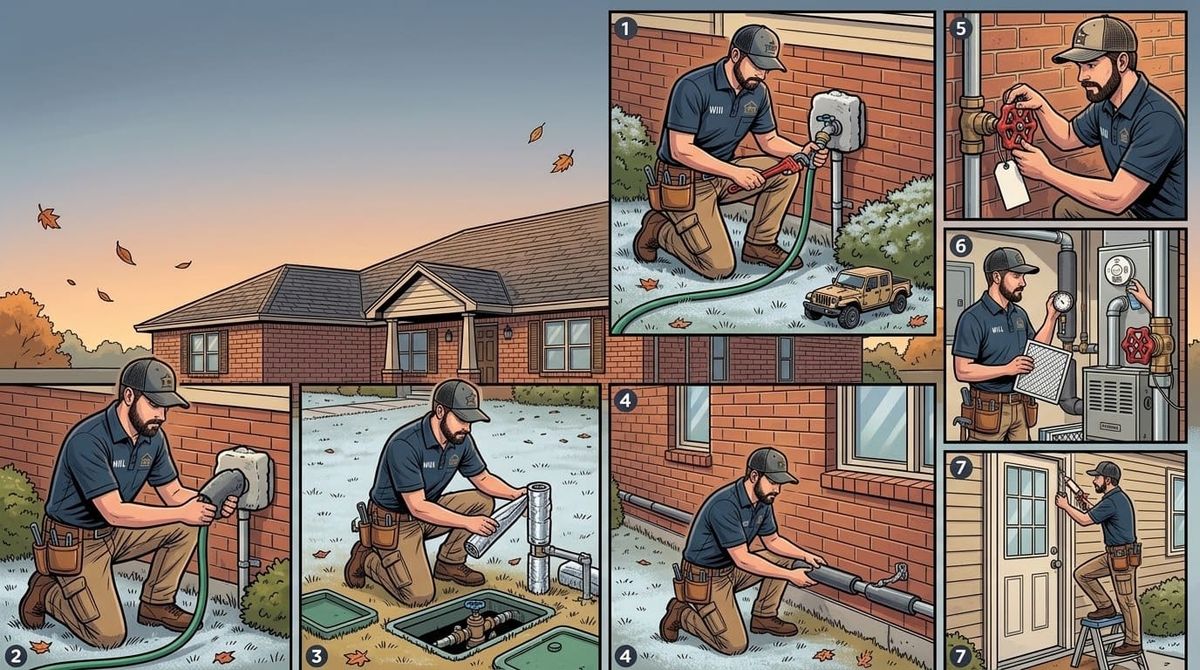
1. Disconnect and drain every garden hose
A hose left attached traps water in the spigot. When that water freezes, it can split the pipe inside the wall, where you won't see it until the thaw. Unscrew hoses, drain them, and store them. This takes five minutes and prevents one of the most common winter plumbing failures.
2. Cover or insulate your exterior hose bibs
Even "frost-proof" spigots fail if a hose is left on them. After removing the hose, add an insulated foam cover, which runs a few dollars at any hardware store. If you have an older standard spigot with a shutoff valve inside the house, close that valve and open the outside spigot to drain it.
3. Winterize the irrigation system
Sprinkler systems have exposed pipes, valves, and a backflow preventer that sit above ground and freeze easily. Shut off the water supply to the system, drain it, and insulate the backflow preventer. If you're not comfortable draining the lines, a sprinkler company can blow them out with compressed air.
4. Protect exposed pipes
Check the attic, garage, crawlspace, and any pipes running along exterior walls. Foam pipe insulation is cheap and easy to install. Pay attention to pipes near vents, gaps, or anywhere you can feel cold air moving. During a hard freeze, open cabinet doors under sinks on exterior walls so warm air can reach the pipes, and let faucets drip slowly.
5. Know where your main water shutoff is
If a pipe does burst, every minute counts. Make sure you and everyone in the house can find the main shutoff and that it actually turns. Valves that haven't moved in years can seize. Test it now, not during an emergency. If it's stuck or leaks around the stem, have a plumber replace it.
6. Test your heating system and safety devices
Don't wait for the first cold night to find out the heat doesn't work. Turn it on now and let it run a full cycle. Replace the filter. Listen for unusual noises and note any odd smells beyond the brief dusty smell of first startup. Also test your smoke and carbon monoxide detectors and replace batteries. Fuel-burning heat sources, including gas furnaces, produce carbon monoxide, and a working detector is not optional. If your furnace is older, an annual service call from an HVAC contractor is worth the money.
7. Seal air leaks and check the fireplace
Walk around the house and look for gaps around exterior doors, windows, garage doors, and where pipes or wires enter the house. Weatherstripping and caulk are inexpensive fixes that also lower your heating bill.
If you have a fireplace, make sure the damper opens and closes properly, and have the chimney inspected before you burn anything. Creosote buildup and blockages are real fire hazards. Close the damper when the fireplace isn't in use so warm air doesn't escape.
A quick note on the bigger picture.
These seven items handle the most common problems, but every home is different. Older homes may have pipes routed through unheated spaces, and newer construction can have builder shortcuts in attic insulation or air sealing. If you're buying a home this fall, a thorough inspection will help identify vulnerable plumbing, insulation gaps, and heating equipment issues before you own them.
If you'd like a professional set of eyes on your home, or you're buying in the Abilene area and want to know what you're getting into, I'm happy to help.
Will del Castillo Professional Real Estate Inspector, TREC #24764 Phantom Inspections, serving Abilene and the surrounding area Call or text: 325-668-6411